



First responders of the Bluebonnet region



Recent news
Two graduates began their co-op careers as interns; four additional staff members receive advanced technical training certifications
By Sidni Carruthers
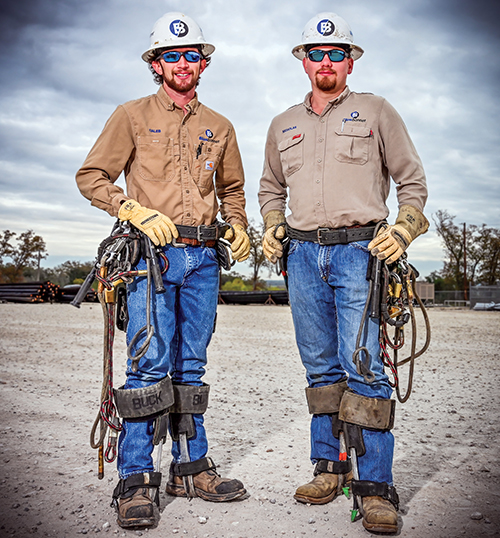
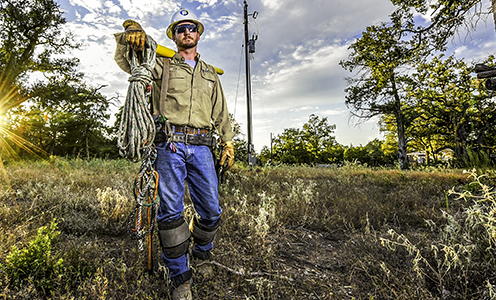
Fifteen apprentice lineworker graduates at Bluebonnet Electric Cooperative are ready to join dozens of other journeyman lineworkers who keep electricity flowing to co-op members across its 3,800-square-mile service area.
Of the 15, two began as lineworker interns at Bluebonnet in 2019, completing a six-month training program before beginning years of apprentice training.
Another four Bluebonnet employees recently completed specialized training programs: one in advanced electric meter work, one in substation operations and two in control center operations.
Each program has different study, testing, training and work requirements. The lineworker apprentice program at Bluebonnet requires 8,000 hours of on-the-job learning, which includes 672 hours of technical instruction — typically a four-year commitment. The recent apprentice graduates have obtained U.S. Department of Labor certification as lineworkers.
“I grew up in the Brenham area with Bluebonnet folks all around. When the apprenticeship opened up and I had an opportunity to work here, I took the chance,” said Brenham-based journeyman Ryan Quinton, one of the 15 graduates. “There is always something to learn out here, but I have a good crew that makes sure we are safe and can serve Bluebonnet’s members.”
He added that the best parts of his job are being able to work outside and do something meaningful.
Many of the apprentice graduates brought knowledge and skills from previous training and other jobs.
“Before coming to work at Bluebonnet, I worked as a heavy-machine operator,” said Matt Mole, now a Bluebonnet journeyman working in Maxwell. “That time taught me the importance of safety, paying attention to what is happening around you and the importance of teamwork. The best part about working at Bluebonnet is the camaraderie that I feel with everyone.”
Including this year’s group, 139 Bluebonnet lineworker apprentices have graduated from the program since it began in 2004.
During their hundreds of hours of classroom instruction and thousands of hours of on-the-job training, apprentices focus on learning how to build overhead and underground power lines, restore power, repair and replace equipment and connect meters.
Garrett Gutierrez, field superintendent in Bastrop, is proud of the program and the quality of service it allows Bluebonnet to provide.
“Most of the guys who go through our program are from around the Bluebonnet service area and are Bluebonnet members, too,” Gutierrez said. “They take pride in their work, and that shows when they are working. It is great to see them be able to work in their communities.”
The most recent Bluebonnet apprentice graduates, in addition to Quinton and Mole, are Nick Baker, Joseph Carrillo, Caleb Clay, James Holder, Casey Jacobs, Matt Jones, Stephen LeFrance, Parker Redwine, Bubba Townsend, Garett Urban, Rhett Vellier, Bryan Woods and John Zamora. Clay and Baker, both from Bastrop, began their Bluebonnet careers as lineworker interns in 2019.
The intern program, which started in 2018, provides six months of technical instruction in line work. To advance into the apprentice program, participants must also obtain a power-pole climbing certification and a commercial driver’s license.
“I was interested in the internship program because I knew Bluebonnet was a great place to work, and there is always a need for lineworkers,” said Baker, who began the program after graduating from Bastrop High School. “Plus I already knew a few guys that were in the apprenticeship program. Having started as an intern and seeing what all it took to be a lineman at Bluebonnet really solidified that this is what I wanted to do.”
The internship program aims to hire candidates who live in the Bluebonnet region.
“We concentrate a lot on safety with these young guys,” said Nick Barta, Bluebonnet safety and training supervisor. “Throughout the cooperative we focus on safety, but it is essential that when the interns start, they understand the importance of safety and how to think about it in all of their work.”
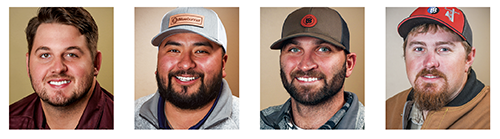
Janca and John Russell.
Four Bluebonnet employees also received certifications for specialized work.
Anthony Garcia, a power quality and metering technician, received training in troubleshooting meter problems and formulas for reading meters. John Russell, a substation technician, completed an apprenticeship to learn skills required to maintain and repair substation equipment. Two control center operators, Bryn Janca and Hunter Adamek, completed a 10-month program and proficiency exam to receive control center operator certifications.
Learn more about Bluebonnet’s intern and apprenticeship programs at the cooperative, at bluebonnet.coop/careers.
Soak up the town’s history, shopping and dining
By Camille Wheeler
From its lone stoplight where U.S. 290 meets FM 1155, Chappell Hill opens like a history book. The two-lane road serves as both Main Street and a stretch of the Texas Independence Trail reaching into the Washington County countryside. On this general path, Stephen F. Austin established his first colony in 1821. A small community with an estimated population of 1,000, Chappell Hill has numerous homes and businesses with national and state historic designations. The unincorporated town traces its beginnings to a time when riverboats on the Brazos River carried cotton to market. In 1838, Tennessee native Robert Wooding Chappell arrived in the area, building a cotton plantation on an original piece of Austin’s colony. Chappell’s granddaughter, Mary Hargrove Haller, bought 100 acres there in 1847, and two years later began selling lots to Chappell Hill’s first residents. Today, the community welcomes thousands of visitors annually for its Bluebonnet and Scarecrow festivals, and Independence Day Parade. With its backdrop of rolling hills and the alluring historic Main Street area, Chappell Hill is a popular weekend getaway. After soaking up the town’s history, shopping and dining, head 20 miles northeast on FM 1155 to the birthplace of the Republic of Texas in Washington.
WHAT TO DO
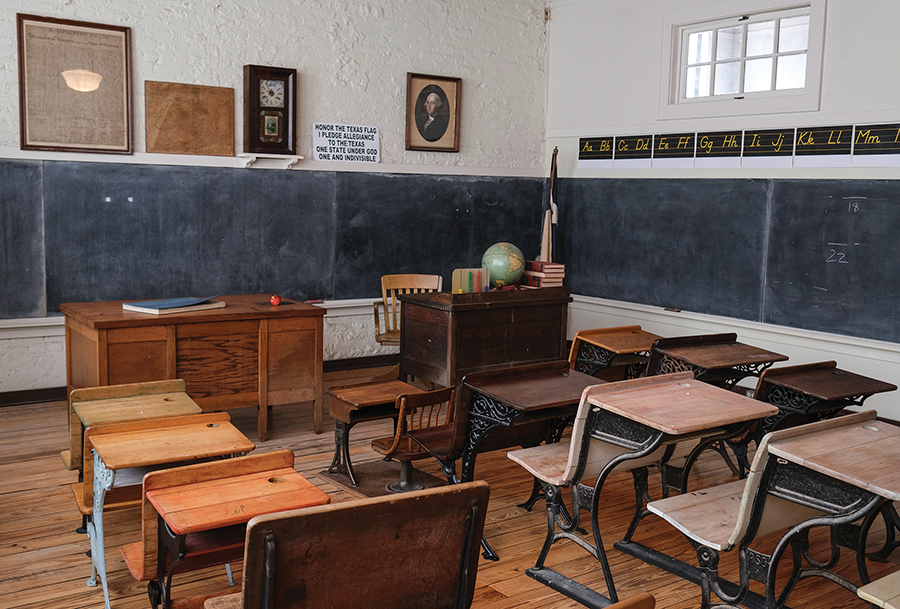
Visit the Chappell Hill Historical Society Museum, 9220 Poplar St., from 10 a.m.-4 p.m. Wednesday-Saturday. Built in 1927 as the Chappell Hill Public School, the building is home to the nation’s largest collection of paintings by renowned Black folk artist Johnnie Swearingen. Call 979-836-6033 to take a society-sponsored tour of the Main Street Historic District — where some restored structures date to the mid-to-late 1800s. Other stops on the tour include historical society-preserved sites Providence Baptist Church, built in 1873; the Circulating Library, with its original book collection dating to the 1850s; and the Rock Store, originally a general store built in 1869 from locally quarried sandstone and hand-hewn timbers. Wall tapestries there depict the town’s history. Another historic stop is Chappell Hill Bank, 5060 Main St., circa 1897; the original teller stations and vault are still in use; 8:30 a.m.-3:30 p.m. Monday-Thursday, 8:30 a.m.-5:30 p.m. Friday, 8:30 a.m.-noon Saturday.
Some renovations are underway at the 293-acre Washington-on-the-Brazos State Historic Site, where 59 delegates signed the Texas Declaration of Independence in 1836. The Star of the Republic Museum and the Visitor Center are scheduled to reopen in 2025, but visitors can stroll the rest of the complex to see how settlers of that era lived. 23400 Park Road 12, Washington. Get more information at www.thc.texas.gov/historic-sites (scroll to the bottom of the page and click on Washington-on-the-Brazos.)
Chappell Hill Lavender Farm, 8 miles north of town, offers events, classes and a gift shop; check chappellhilllavender.com for information, blooming season updates, plant availability and days/hours of operation; 2250 Dillard Road, Brenham; 979-251-8114.
GRAB A BITE
Dining options ranked in Tripadvisor’s top restaurants are:
Bevers Kitchen & Gifts, 5162 Main St., popular for its chicken-fried steak and rich assortment of pies; 10 a.m.-2 p.m. Tuesday-Thursday, 10 a.m.-4 p.m. Friday-Saturday, 10 a.m.-3 p.m. Sunday.
Chappell Hill Bakery & Deli, 8900 U.S. 290 E., has its own butcher shop and serves up barbecue and pastries; 6 a.m.-8 p.m. Sunday-Thursday, 6 a.m.-9 p.m. Friday-Saturday.
Chappell Hill Sausage Company, 4255 Sausage Lane, makes its own smokehouse meats; restaurant open 8 a.m.-4 p.m. Monday-Friday, 8 a.m.-3 p.m. Saturday; retail shop open 8 a.m.-5 p.m. Monday-Friday, 8 a.m.-4 p.m. Saturday.
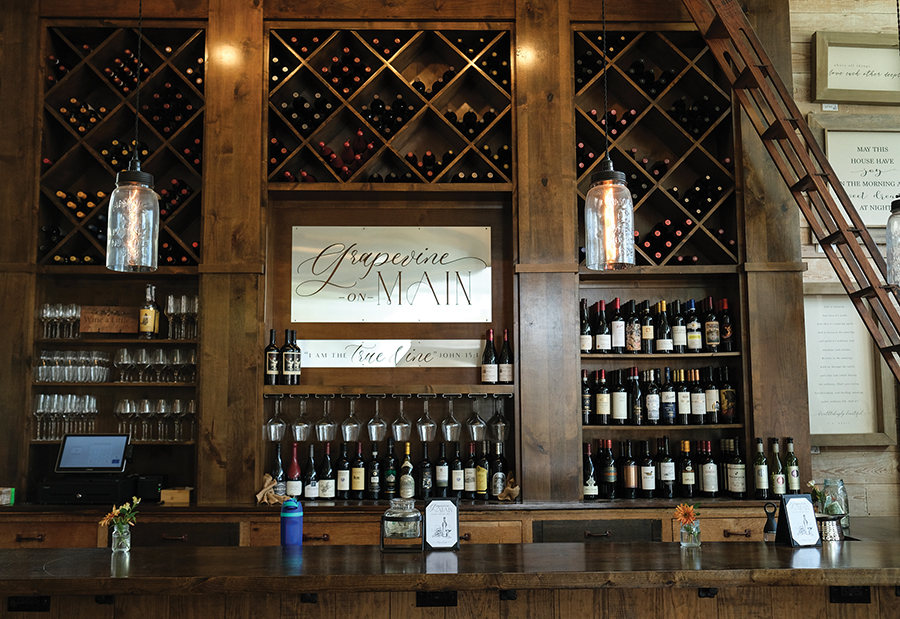
While in town, you can sample the 59 Delegates wine, plus other handcrafted selections, at Texas Star Winery, 10587 Old Chappell Hill Road, 11 a.m.-6 p.m. Friday-Saturday, noon-5 p.m. Sunday. Also get a glass at the Grapevine on Main wine bistro, 5120 Main St., open daily, live music Friday and Saturday evenings; call 979-777-3112 for lunch and dinner hours.
STOP AND SHOP
The Brazos Star, 5101 Main St. Handmade items galore, vintage kitchenware and homemade pickles — ask owner Mary Louise Young about her professional bowling career, too, 10 a.m.-4:30 p.m. Saturday-Sunday.
Bluebonnet House & Garden Center, 5095 Main St. Native and tropical plants, collectibles, locally made gifts and more, 10 a.m.-4 p.m. Wednesday-Sunday.
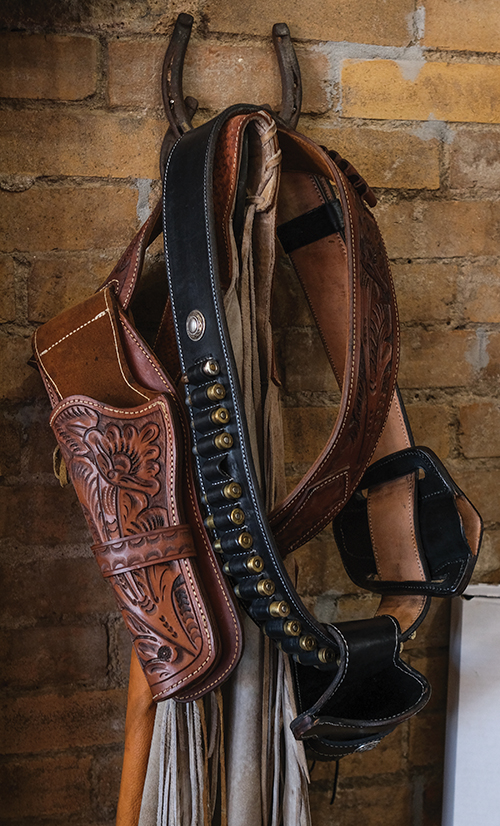
Chupacabra Leather Co., 5088 Main St. Gun holsters, knife scabbards and belts are made in the shop, 1-5 p.m. Tuesday-Friday, 9 a.m.-5 p.m. Saturday, 1-4 p.m. Sunday.
Cotton Pickin's Boutique & Market, 5145 Main St. Women’s linen clothing, home decor, 11 a.m.-5 p.m. Wednesday-Saturday, noon-4 p.m. Sunday.
Other shops worth a stop: Kippers Kountry Store, 5084 Main St., noon-4 p.m. Thursday and Sunday, noon-5 p.m. Friday, 10 a.m.-5 p.m. Saturday, and DLS Interiors, 5075 Main St., 10 a.m.-4 p.m. Wednesday-Saturday.
A TIP FROM LOCALS
Relax with friends at Carol’s Ice House, 5090 Main St., where owner Carol Salah is always behind the bar; noon-10 p.m. Wednesday-Saturday, noon-5 p.m. Sunday.
This is part of an ongoing series featuring communities in the Bluebonnet region.
Bluebonnet Electric Cooperative and LCRA representatives present a $10,000 grant to the Winchester Area Civic Association for improvements to Zilss Memorial Hall. The grant is part of LCRA’s Community Development Partnership Program. Pictured in the front row are, from left, Ellen Brumback, association secretary; Barb Schafer, association member; Margaret D. "Meg" Voelter, LCRA board member; Byron Balke, Bluebonnet Board assistant secretary/treasurer; and Dinah Breeden, association vice chairman. Second row, from left, Margaret Atkins, association treasurer; and Michele Weth, association member. Third row, from left: Rhoda Gersch, association member; Pat Karisch, association past president; Bill Karisch, association member; Sherry Murphy, Bluebonnet Giddings-area community representative; and Liz Wallace, association member. Back row, from left, Nicolette Morrison, association president; Sherwood Gersch, association member; Kate Ramzinski, LCRA regional affairs representative; Russell Jurk, Bluebonnet Board member; Richard Schafer, association member and co-project manager of renovation; Matthew L. “Matt” Arthur, LCRA board member; and Tom Atkins, association member and co-project manager of renovation.
Zilss Memorial Hall soon will receive much-needed improvements to its nearly 100-year-old building, thanks to a $10,000 grant from Bluebonnet Electric Cooperative and the Lower Colorado River Authority.
The Community Development Partnership Program grant, along with $4,238 in matching funds from the Winchester Area Civic Association, will enable renovations to a restroom to comply with the Americans with Disabilities Act, constructing a closet and adding attic insulation. The association also will rebuild an ADA-compliant ramp into the building and purchase two air conditioners and a refrigerator.
The hall, built in the 1930s as a schoolhouse, later became the cafeteria for the nearby high school. The building was converted to a facility for public use after the Winchester public school closed in 1949. Emil Zilss, one of the leading merchants and early residents of Winchester, donated the building to be used as a community meeting place.
“The building was used for weddings and receptions when it first became a community hall,” said Rhoda Gersch, a WACA member who has held various officer positions over the years. “We have heard stories from some community members who were married in the hall, and in at least one instance, the weather was so cold that they decided to just spend their wedding night there instead of braving the cold to go back home.”
After members of the community officially created the Winchester Area Civic Association in the 1960s, association members made upgrades such as installing air conditioners and renovating the kitchen. The upgrades made the hall a place for Fayette County gatherings for decades.
“We still have wedding receptions there, but now there are so many events and uses for it,” Gersch said. “We recently started a farmers market, and we regularly have birthdays, wedding showers, and baby showers, and the fire department has its annual meeting and Christmas party there.”
WACA continues to host community events at the site.
“We have an annual community party at Christmas with Santa, a Spring Fling with the Easter Bunny, and a Taste of Winchester where we ask people to bring their favorite cooked dish to share with others, as well as to enter in a contest,” Gersch said. “And we can’t forget our bimonthly Young at Heart get-togethers, which are so important in some people’s lives, when about a dozen people bring a little meal and play dominoes or cards for three hours.”
The hall also is home to classes and events for the Quilt Block Trail of Winchester, which was created by Gersch and fellow resident Margaret Atkins. All proceeds from the group’s classes and sales of quilt blocks benefit the WACA. The group’s main fundraiser is a popular domino tournament with a fried chicken dinner that helps pay some of the hall’s bills, but primarily goes to providing scholarships for Fayette County students.
“We are so pleased we can make these upgrades with the grant money to keep this hall in use for many more years, because Zilss Memorial Hall is a place where people come for fellowship with their neighbors, and it’s been that way for a long time,” Gersch said.
The community grant is one of five grants being awarded by Bluebonnet and LCRA through LCRA’s Community Development Partnership Program, which helps volunteer fire departments, local governments, emergency responders and nonprofit organizations fund capital improvement projects in LCRA’s wholesale electric, water and transmission service areas. The program is part of LCRA’s effort to give back to the communities it serves. Bluebonnet Electric Cooperative is one of LCRA’s wholesale electric customers and is a partner in the grant program.
Applications for the next round of grants will be accepted in January. More information is available here
Today’s bullfighters skip the face paint and silly clothes for the serious business of protecting riders in the rodeo ring
Story by Pam LeBlanc -- Photos by Laura Skelding
If a snot-slinging, 1,500-pound hunk of muscle and rage hurtled across an arena in your direction, would you run toward it or beat a hasty escape?
Your answer could determine whether you’d make a good bullfighter, the term now used in the U.S. and Canada to describe the rodeo athletes who distract bulls and protect riders during bull-riding competitions.
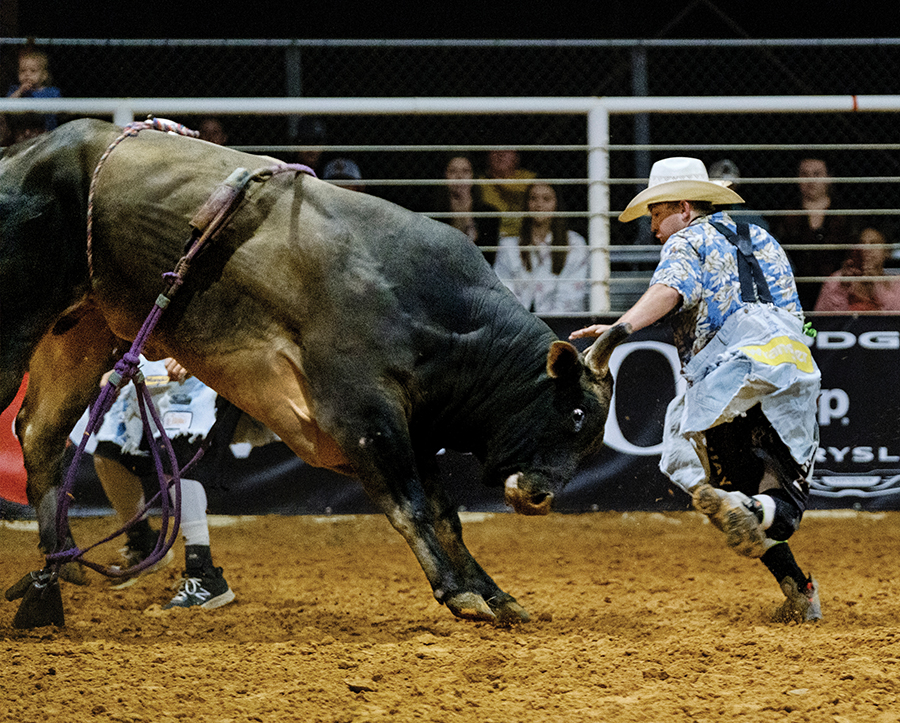
They used to be called rodeo clowns, but there’s not much that’s funny about working under such dangerous circumstances.
“The Secret Service protects the president. We’re there to take the bullet instead of the cowboy,” said Wesley McManus, a former bullfighter who now owns Diamond Cross Rodeo Company, a Lexington-based contractor that provides bucking horses for rodeos across Texas. “In the moment, you just go in there and step in between the cowboy and the bull.”
McManus, 50, spent 20 years tangling with the angry Volkswagen Beetle-sized beasts.
“It’s like jumping out of a plane,” he said. “A lot of people don’t see the reason for it. But there’s that rush, that feeling- — there’s nothing like it. It starts a fire inside you, and then it turns into a passion for the sport of rodeo and the whole Western way of life.”
Learning the ropes of bullfighting
McManus grew up in Lexington in Lee County and did some bull riding in high school. He eventually decided he was better at helping cowboys get away from snorting bulls than trying to ride them. Plus, the paycheck was steadier: Bullfighters typically earn between $200 and $2,000 per show, according to the Bureau of Labor Statistics. He started learning when he was just 18.
“I told my mom and dad when I was 5 that I wanted to go to rodeo clown school. They thought it was cute until 12 years later when I was still saying it,” McManus says.
Some who do the job still wear greasepaint and bright clothes, but many don't. Instead, they wear technical jerseys and often belong to the International Professional Rodeo Association.
Skills essential to the job are “reading cattle and anticipating where the rider is going to come off,” McManus said.
McManus got his start as a bullfighter at a small Sunday afternoon rodeo in Lexington and eventually worked his way into bigger gigs. Mark Goodson, now chairman of the Lee County Sheriff’s Posse Rodeo, gave McManus his first big bullfighting job at a Youth Rodeo Association event at the arena in Giddings.
“You see the ‘want to’ in guys like Wesley,” Goodson said. “He was a natural.”
Some people enroll in bullfighting training classes, such as those offered around the country by famed bullfighter Cody Webster, who this year offered classes in San Antonio, Fort Worth, Cleburne and Arlington. Webster is considered one of the greatest bullfighters of this generation. Clinics are also offered in New Caney, near Houston. Others just practice skills on their own or at places like Bad Dog Rodeo in Belton, which offers a practice pen for up-and-coming bullfighters.
McManus is mostly self-taught.
He started by sorting calves and paying attention to which hoof an animal leads with while running. That “lead” telegraphs which direction the bull is likely to pivot, tipping off bullfighters which direction to move.
“A lot of it is natural reaction,” McManus said. “You can’t teach anybody how to be cattle savvy, and you can’t teach heart, but you can sharpen skills.”
Typically, two or three bullfighters and one barrel man (the athlete who hops into a padded barrel at which an angry bull charges) position themselves on either side of the bull when it bursts out of the chute and into the arena.
The rider has to stay on the bull for at least 8 seconds to earn points. They sometimes get a hand caught in the rope they hold to stay in the saddle. When that happens, the bullfighter works the rider’s hand loose, then draws the animal away from the rider when he finally lands on the ground.
“When that rider gets hung up, they’re depending on you to get them out of a jam,” said Goodson, the rodeo chairman. “You’re going to get hit and hurt. It’s a matter of how bad.”
And it can get bad.
“When you get run over, you’ve got four feet coming at you. You’ve got to worry about getting back up, because he’s probably coming back for you,” McManus said.
McManus recites a list of injuries he has suffered during his career: a blown-out knee, broken ankle, cracked ribs, dislocated fingers and plenty of stitches.
One memorable day, a rampaging bull stepped on his face and broke his teeth. After that, he said he prayed: “If I’m not supposed to do this, take the want away.” But the desire to be a bullfighter didn’t fade. “When I came back, I was on fire,” he said.
Eventually McManus retired, shifting his focus to the business of providing livestock to rodeos.
Like father, like son
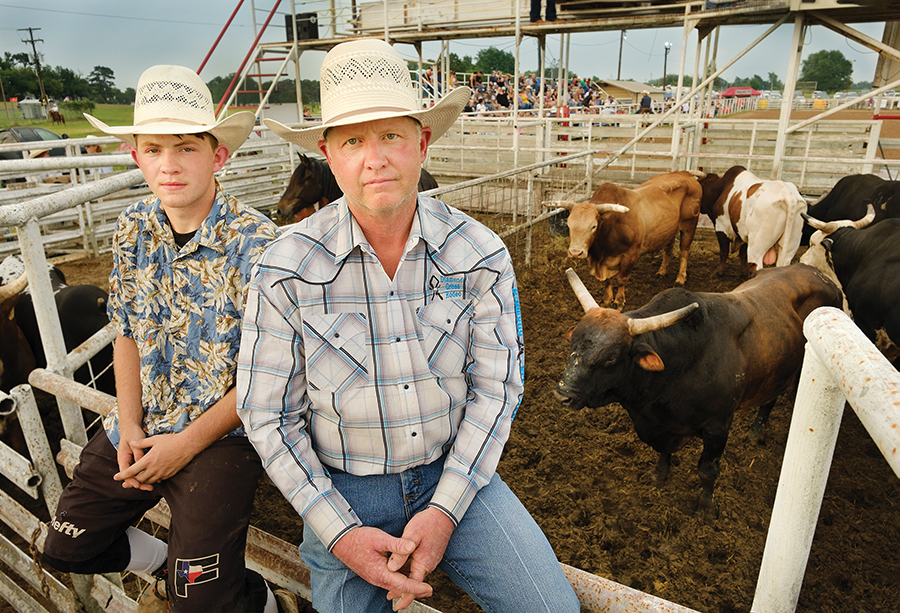
A generation later, McManus’ son is following in his father’s footsteps. Like his dad, Dylan McManus knew early on he wanted to become a bullfighter.
“We tried to keep him away from it as long as we could,” Wesley McManus said.
The fear he now feels as a parent watching his son in the ring far exceeds the fear he endured in the arena while facing a bull, he said.
“I love it when young guys come in, but you’ve got to be really serious,” Wesley McManus said. “You can get hurt. We’ve lost a few. If you’re out here for the girls, you’re in it for the wrong reason.”
Dylan, 18, started bullfighting almost three years ago.
“My dad was really good when he did it and I looked up to him and his buddies as role models,” Dylan said. “I guess it’s always been in my heart to do it.”
He started at age 9, working with his father to sort calves in pens at his home. “We’d go to the sale barn and buy something little that was pretty mean,” he said. “I would learn the fundamentals with something that wasn’t big enough to hurt me too bad.”
That evolved into bullfighting at small events, which led to working at larger events like the Cowboys Professional Rodeo Association Finals in Angleton, near the Texas Gulf Coast, and the San Antonio High School scholarship finals at the San Antonio Stock Show & Rodeo.
Now Dylan wants to make a career of it.
“There’s nothing like making a good (cowboy) save and they get up and shake your hand and they say thank you,” he said. “There’s nothing like knowing you’ve got somebody’s back.”
The hard part is pushing fear aside. “You’ve got to take control over your mind and not be afraid of what’s going to happen,” he said. “It’s really hard to make yourself go up to a big animal that’s trying to hurt you.”
When done right, though, it’s a rush like no other.
“You’ve got to have three (extra) sets of eyes. You’ve got to know when (the cowboy’s) going to fall, where the bull’s going to go, where your partner’s going to go and where you’re going to go,” he says. “That’s a lot of timing and calculation, and it happens so fast. It’s basically fight or flight.”
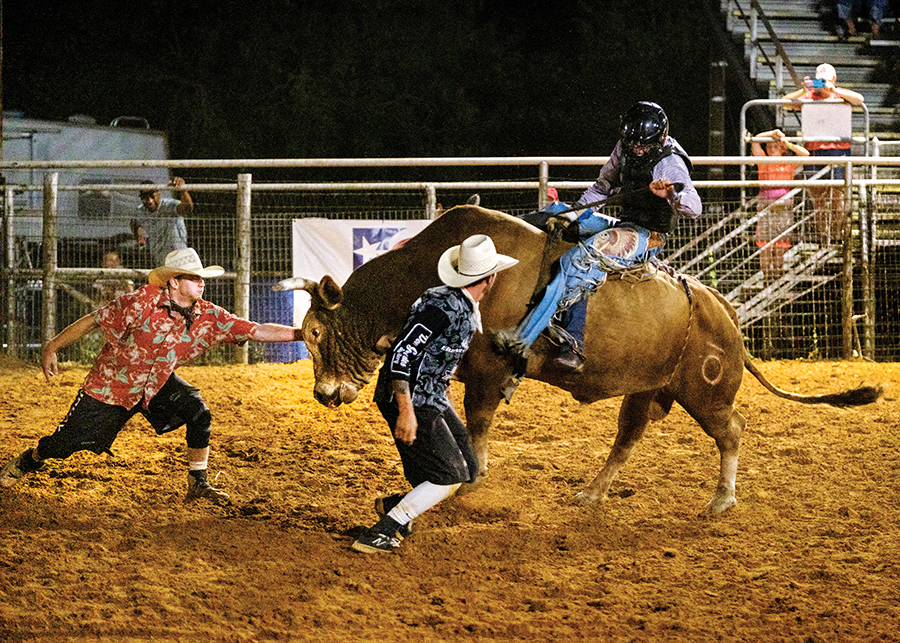
That’s why a good partner matters, and for Dylan McManus, that person is Dakotah Teague. The two team up often, and worked the Cowboys Professional Rodeo Association Finals this summer, where both bullfighters got up close with thrashing animals. McManus had to grab a bull’s head to distract it from a bullrider, and Teague took a couple of hits. He described the experience as similar to what it might feel like standing in front of a car going 15 mph.
“It helps a lot more when you trust someone on the other side of the bull to save not only the bull rider, but yourself if you get down. It’s a brotherhood, that’s what it is,” said Teague, 31, who started bullfighting when he was in high school.
Teague honed his skills at a bullfighting clinic with well-known bullfighter Cody Webster, then started working rodeos a decade ago.
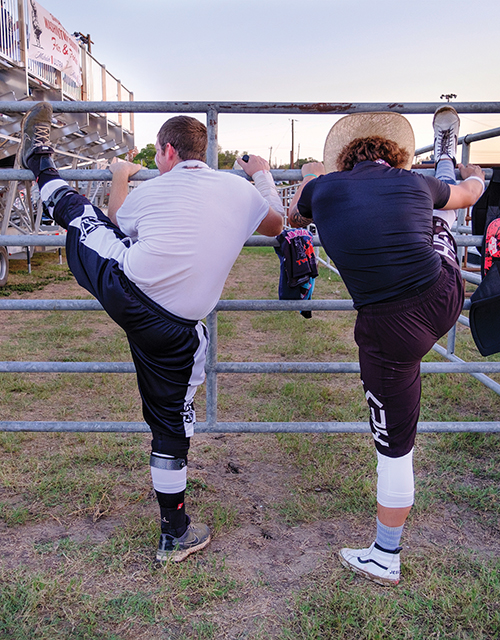
Because injuries are common, the bullfighters wear vests plated with thick plastic that can make an errant hoof slide off and help distribute the impact of a kick over a wider area. They also wear knee and ankle braces. Dylan McManus doesn’t wear a helmet — “Just my old black felt cowboy hat” — but he does lace up basketball shoes before he heads to the arena.
“It’s hard to run in boots,” he said.
The camaraderie and connection among athletes keeps them coming back. It’s a family, they say.
“Oh, we love the sport,” Teague said. “We love what it’s all about and we love protecting cowboys. We always say we want the cowboys to go home safe to their families before we do.”
Want to watch the bullfighters?
Catch all major rodeo action across the Bluebonnet Electric Cooperative service area in 2024.
RODEO AUSTIN
March 8-23
Rodeo Austin Fairgrounds, 9100 Decker Lake Road, Austin
rodeoaustin.com
email: info@RodeoAustin.com
FAYETTE COUNTY SHERIFF’S POSSE RAM RODEO
April 19-20
Fayette County Sheriff's Posse Arena, 2141 Blankenburg Lane, La Grange
Fayette County Sheriff’s Posse Facebook page
email: fcasnpowell@verizon.net
LEE COUNTY SHERIFF’S POSSE RODEO
April 18-20
Lee County Sheriff's Posse Arena, 2591 U.S. 290, Giddings
lcspgiddings.com
email: lcspgiddings@gmail.com
CHISHOLM TRAIL ROUNDUP RODEO
June 12-15
Lockhart City Park, 504 E. City Park Road, Lockhart
lockhartchamber.com/chisholm-trail-roundup
email: staff@lockhartchamber.com
BASTROP HOMECOMING & RODEO
July 30-August 3
Mayfest Hill Park, 25 American Legion Drive, Bastrop
bastrophomecomingrodeo.org
email: generalinfo.bhr@gmail.com
WASHINGTON COUNTY FAIR RODEO
Sept. 10-23
Washington County Fairgrounds, 1305 E. Blue Bell Road, Brenham
washingtoncofair.com
email: dean@washingtoncofair.com
COLORADO COUNTY FAIR & RODEO
Sept. 12-14
Colorado County Fairgrounds, 1146 Crossroads Blvd., Columbus
coloradocountyfair.org
email: info@coloradocountyfair.org
AUSTIN COUNTY FAIR & RODEO
Oct. 10-12
Austin County Fairgrounds, 1076 E. Hill St., Bellville
austincountyfair.com/prca-rodeo
email: ACfair@austincountyfair.com
GUADALUPE COUNTY FAIR & RODEO
Oct. 10-13
Guadalupe County Fairgrounds, 728 Midway, Seguin
gcfair.org
email: office@gcfair.org
ROCKDALE FAIR & RODEO
Oct. 18-20
Fair Park, 200 Walnut St., Rockdale
rockdalefairassociation.com; Rockdale Fair & Rodeo Facebook page and rockdaletx.gov/343/Rockdale-Fair-Rodeo
email: rdalefair@gmail.com
WILLIAMSON COUNTY FAIR AND RODEO
Oct. 23-26
Williamson County Expo Center, 5350 Bill Pickett Trail, Taylor
wilcofair.com/events
email: info@wilcofair.com


